
THANK YOU FOR SUBSCRIBING
× 
Prop Tech Outlook Weekly Brief
Be first to read the latest tech news, Industry Leader's Insights, and CIO interviews of medium and large enterprises exclusively from Prop Tech Outlook

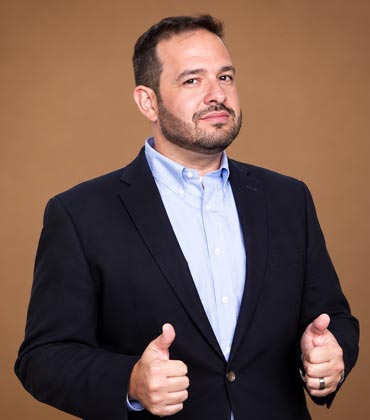 Ian Marlow, Founder & CEO
My path into real estate technology was not a straight line and I think that is actually what gave me a different perspective on the industry. I graduated with a degree in Chemical and Environmental Engineering, which taught me to think in systems, how different components interact, where inefficiencies compound and what happens when one part of a process fails to communicate with another. That systems thinking never left me.
When I moved into corporate real estate roles, first at The Gale Company and later at Newmark Knight Frank where I served as Global CIO and CEO of Newmark Global Management Services, overseeing a portfolio exceeding 280 million square feet across more than 40 countries, I saw the same problem everywhere: organizations were running enormously complex operations on fragmented, disconnected technology. The accounting team was on one system, property management on another, building infrastructure on yet another and nobody had a complete picture.
What convinced me that technology could fundamentally change real estate was not any single innovation, it was the realization that real estate organizations were still operating the way they had for decades, while every other industry was being reshaped by integrated platforms and data-driven decision making. The gap between what was possible and what was actually being done was enormous. That gap was the opportunity.
Where Building Systems and Business Operations Disconnect
The biggest disconnect I see consistently is between the financial and operational layers on one side and the physical building layer on the other. Most real estate organizations have made meaningful investments in their ERP platforms, their Yardi, MRI or RealPage environments and their corporate IT infrastructure. But the building itself is often still running on a patchwork of systems from different vendors, with different support relationships, different data formats and no real connection to the operational platforms the business runs on.
What that disconnect creates in practice is accountability gaps. When a network issue affects a leasing office, is that a managed IT problem or a building infrastructure problem? When an access control system goes down, who owns the resolution, the IT team, the low voltage vendor or the property manager? In most organizations, the answer is unclear and residents or tenants experience the delay while teams figure out who is responsible.
There is also a data disconnect that is less visible but equally damaging. Building systems generate enormous amounts of operational data - energy consumption, access patterns, maintenance triggers - but that data rarely flows into the financial and property management platforms where it could actually inform decisions. Owners are sitting on information they cannot use because the systems that generate it and the systems that need it have never been connected.
Evaluating Technology through Operational Reality
The most common mistake I see in technology evaluations is that organizations focus almost entirely on the features of the platform and very little on the operational realities around it. A system that looks perfect in a demo can create serious problems in practice if it does not align with how the business actually runs.
The first thing leaders should consider is their data. Before any ERP migration or platform change, you need an honest assessment of the quality of your existing data, your chart of accounts structure, your lease records, your vendor information. Garbage in, garbage out. We have seen implementations fail not because the technology was wrong but because the underlying data was never properly addressed before the migration began.
-
We built FITECH on one simple idea, real estate organizations deserve a technology partner who is accountable for the whole picture, not just their corner of it.
The second is people and process. Technology does not change organizations on its own. The people who will use the system every day need to be part of the evaluation and the processes need to be mapped before configuration begins, not after. A platform should be configured around how your business operates, not the other way around.
The third is support. Who is going to be there when something goes wrong at 9 PM on a Friday before month end? The quality of ongoing support is often the deciding factor between a technology investment that delivers value and one that becomes a source of frustration. That is something you cannot evaluate from a feature list.
Connecting Services Under One Accountability Model
When I built FITECH, I drew directly on what I had learned managing large, complex real estate portfolios at Newmark. The single biggest operational pain point was vendor fragmentation. When you have five different providers each managing their own piece of your technology and operations environment, you spend an enormous amount of time and energy managing the relationships between them and when something goes wrong, every vendor's first instinct is to point at someone else.
The end-to-end approach eliminates that dynamic. When FITECH manages your ERP, your corporate IT, your lease administration, your accounting and your building infrastructure, there is one team that understands how all of those pieces connect. That matters enormously in practice. When we implement a Yardi environment, the people doing that work also understand the accounting workflows that depend on it and the IT infrastructure that has to support it. There is no translation layer between specialists who do not speak each other's language.
For real estate organizations specifically, this integration also matters at the portfolio level. When a client acquires a new property, we can assess the technology environment, handle the data migration, stand up the IT infrastructure and ensure the lease and accounting data is ready for day-one operations, all as one coordinated effort rather than a series of parallel tracks that may or may not stay synchronized.
The simplest way I can describe the value is this: one team, one accountability, no finger-pointing. In an industry where operational complexity is the norm, that clarity makes a material difference.
Turning Emerging Technology into Operational Value
The development I am watching most closely is the practical application of artificial intelligence in real estate operations, not AI as a concept but AI as a working tool that changes how specific tasks get done. Lease abstraction, financial reporting, predictive maintenance, tenant communication, these are areas where AI-assisted workflows are already starting to deliver real efficiency gains and I expect that to accelerate significantly over the next two to three years.
FITECH has been investing in this area directly. We now run our own AI programming teams and we are evaluating which platforms and agents can genuinely improve operations for our clients rather than simply adding complexity. Our approach is deliberate, we are not interested in deploying technology because it is new. We are interested in deploying it because it solves a real problem for the people running real estate portfolios day to day.
The second development I see having major practical impact is the continued convergence of connectivity standards and building infrastructure. WiredScore certification has moved from a differentiator to a baseline expectation in competitive markets. Tenants, both residential and commercial, expect buildings to function as connected environments and owners who have not invested in the underlying infrastructure are increasingly finding that reflected in their leasing results.
The third is cybersecurity, which has moved to the top of the agenda for ownership groups in a way it simply was not five years ago. Real estate organizations handle sensitive tenant data, large financial transactions and increasingly connected building systems. The risk profile has changed and the organizations that recognize that and invest proactively will be in a meaningfully stronger position than those that respond only after an incident.
Integrated Real Estate IT without Fragmented Oversight
Real estate technology decisions rarely remain confined to the corporate office. A network change can affect leasing staff at one property while an access control issue interrupts residents at another. ERP data must follow acquisitions and dispositions without delaying rent collection or financial reporting. Yet many owners still manage these responsibilities through unrelated regional vendors, internal specialists and property-level contractors. Each handoff creates another point where accountability can blur.
Portfolio growth magnifies the problem. Acquiring buildings in new markets often introduces different firewalls, access systems and support arrangements. Local decisions may solve an immediate property need but make centralized management harder. Technology costs become difficult to compare and management teams lack a consistent view of what is installed across the portfolio. Real estate IT providers should therefore be assessed on their ability to create repeatable standards without ignoring the conditions of individual assets.
Breadth matters, but only when services work together. Corporate IT support cannot be separated cleanly from the technology inside a building. Leasing offices depend on reliable networks while access control, video security and amenity systems rely on the same infrastructure. ERP platforms also intersect with property accounting and lease data. A provider that covers only one layer may complete its assigned task yet leave the owner coordinating the remaining dependencies.
“FITECH combines managed IT and property technology services with ERP implementation, lease administration and accounting support under one service structure.”
Acquisition and disposition support deserves equal scrutiny. Buyers need an accurate inventory of building systems before closing and a clear estimate of future support costs. Data from the seller must be reviewed, extracted and moved into the buyer’s environment in time for billing and rent collection. During a sale, records must be prepared for transfer without weakening the seller’s continuing business. Providers should have a defined process for these transitions rather than treating each transaction as an isolated technical request.
ERP work introduces another test. Data quality must be examined before migration, not after users encounter missing records or unreliable reports. Some owners can obtain usable exports from their existing platforms. Others require database extraction and a plan for correcting incomplete information. Implementation skill should include this preparation as well as continuing support for custom reports, asset onboarding and system changes after launch.
Staffing flexibility also influences the economics of the engagement. Accounting workloads rise during property onboarding, lease activity and year-end reporting. Third-party managers may need only part of a full-time accounting or IT resource for a given client. Owners face similar swings as portfolios expand or contract. A service partner should be able to add capacity for defined periods without forcing the client to maintain permanent headcount for intermittent work.
Accountability becomes the final dividing line. Multiple specialists often respond to a failed device by redirecting responsibility between the application, network and equipment vendor. Executives should look for a model that reduces those disputes and keeps one party responsible for restoring the working service.
FITECH fits this buying logic through a model built specifically around real estate ownership and property management. It combines managed IT and property technology services with ERP implementation, lease administration and accounting support under one service structure. Its national reach helps owners apply common technology standards across geographically dispersed assets while retaining support at the property level. The model also covers portfolio transitions, ongoing ERP requests and variable back-office workloads. For executives trying to reduce vendor fragmentation without building every specialty internally, FITECH merits focused consideration.
...Read more
